Showing posts with label virus. Show all posts

Thursday, March 7, 2013

Breastfeeding a sick baby

Being able to breastfeed a sick baby is one of the greatest benefits of breastfeeding.  I want to start with the caveat that their are a few diseases where a baby should not breastfeed.  These are generally genetic problems that leave an infant unable to digest breastmilk.  There are also premature infants who are too weak to extract enough milk from the breast that need breastmilk provided for them by gavage feedings.  If you have one of these situations the guidelines below might not apply.  Check with your medical provider.

But for those with normal babies who have caught an illness, breastfeeding is truly a gift!


1. You do not have to stop breastfeeding when baby is sick.  While it is generally recommended to avoid dairy with a vomiting or diarrhea illness and sometimes with a respiratory illness, this is not true for breastmilk!  You don't have to buy or make electrolyte solutions and then try desperately to get your baby to drink it!

2.  Breastfeeding is comforting for baby.  He will feel better while nursing.  Studies have shown breastfeeding to reduce the sensation of pain in infants.

3.  Baby will get antibodies for the illness from your breastmilk which will help her to get better faster.

4.  If baby has a respiratory illness you might have to clear out baby's nose before he will be able to nurse.  You do this with nasal saline and a bulb syringe.

5.  If you find that baby is vomiting after breastfeeding, she might be getting too much volume in her stomach.  When baby has a vomiting illness if there is too much in her stomach she is more likely to vomit.  That is why they recommend starting with small amounts of liquids.  You can do this by shortening a feeding time or emptying our breasts with a breast pump prior to feeding.

Monday, November 26, 2012

Yeast Culturing


Well, we had a great Thanksgiving.  We spent time with my parents, went to Great Wolf Lodge, ate a great meal, had friends over on Saturday and had no school for almost a week.  My schedule was completely off, but the house does not look half bad and most of the Christmas decorations are up.  I do not yet have the croup post for you.  And I do not have any videos, I got lucky and neither boy was sick the next night.  During the last week the baby got his six month shots, which included rotavirus.  That night he threw up all over me at Olive Garden.  Yuck!  And that is why the diaper bag should have a change of clothes for mom in addition to baby.  He only threw up once on Monday, so I think it was maybe a reaction to the rotavirus vaccine, but there really is no way to tell.  He had had a respiratory virus and little kids especially can vomit with a respiratory virus.  He had no fever and was acting happy the whole week. He even enjoyed sweet potatoes on Thanksgiving.


So now, it’s Monday.  School is back in.  Hubby is at work and I need to get back in the groove.  Saturday I started the San Francisco Sourdough yeast starter from Cultures for Health.  I had gotten it earlier, but I was pretty sure life would be too crazy over Thanksgiving to keep it alive.  Since I barely got on the computer to check on the blog, I think I made the right choice.  In the video on Cultures for Health, they advise to throw away part of your yeast culture with the third feeding so that you don’t have too much.  I couldn’t bring myself to do it.  I was afraid I would mess up what I had left and not have back up.  I thought, I’ll just split it into too, and have an active one, a frozen one, and a fridge one that I feed once a week.  This is still my plan, but I am beginning to understand why I should have thrown some away.  Or why I might need to soon…I may run out of flour.  I took out 1 ¼ cups of the starter to make sourdough focaccia bread from Jeanne’s recipe at SimpleMath Bakery.  We will see how strong the starter is.  If it rises well, then I will make a loaf of sourdough bread.  And then do the whole fridge and freezer thing so I have back up when I kill my starter.


Monday, October 22, 2012

Flu shot anyone?


The flu vaccine.  What do we need to know to decide if we want to get it for ourselves and for our kids?  I am going to be honest.  This is a difficult post to write.  There are strong emotions associated with vaccinating and not vaccinating our children.  

Children, even healthy children, can die from the flu.  How many die each is year varies with the circulating virus and the severity of the flu season.  The worse season was the 1918-1919 pandemic when more than 20 million people died. 
Some day I should write an "Immune System 101" post.  But here is a quick description.  The immune system has two kinds of "troops" for fighting a virus or a bacteria.  It had general or non-specific troops and it has specialized or specific troops.  The general troops are the first responders.  They catch a virus.  If the body has seen it before it usually will have specialized troops that are more efficient at killing the virus.  If it has these specialized troops, the immune system will send them out and quickly make more for the fight.  If you have enough of these troops you don't get sick.

If you don't have specialized troops, you body develops them so it can fight the virus.  But this takes time and the general troops may not be able to keep up.  That is when you get sick. 

Usually, adults' immune systems have seen a flu virus and have some specialized troops available to attack a flu virus, but in the 1918 virus "looked" different enough that for most people specific immune system did not recognize it .  And that is why so many people died that season.

You have heard the phrase use it lose it?  That applies to your specialized troops.  If your body doesn't ever use the specialized troops for flu, it may stop making them.  So based on all of this information about the flu, it is thought that by getting the vaccine each year, people will not only be able to avoid getting the flu this year, but the immune system may become better at recognizing it.  Possibly even strains that are not in the vaccine. 

Worst Case Scenario

So, to basically make an informed decision about the flu shot, we need to have an idea of what is most likely to happen if you or your child gets the flu and look at the worst case scenario.  I discuss this more here.  But depending on your child’s health and age, most likely he would be sick for a week or two with fever, cough, runny nose, and sneezing.  He could get an ear infection, pneumonia, or other complication. He could be hospitalized.  You could be hospitalized if you catch it as well.  Worst case scenario is death. But the risk of catching the flu depends on your environment.  

I have a relatively high risk of catching the flu as a healthcare provider seeing sick kids during flu season with my own children attending public school.  Someone else who works from home and homeschools their children is going to have much less exposure to the flu virus.
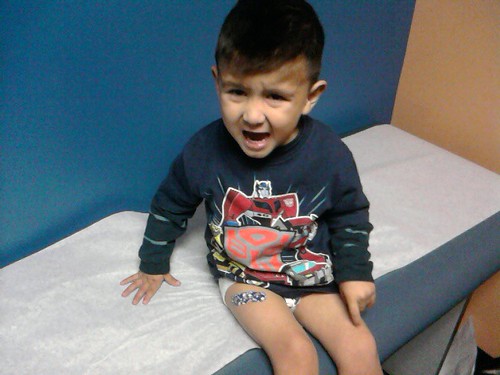
The h1n1 Swine Flu virus vaccine shot for Emilio. Side effect symptoms: "Squeal like a Pig" by Dj Crazy Gabe
The h1n1 Swine Flu virus vaccine shot for Emilio. Side effect symptoms: "Squeal like a Pig", a photo by Dj Crazy Gabe on Flickr


Effectiveness

We also need to know how effective the vaccine is and what all the possible consequences or side effects of the shot are.   From my review of the literature there is not a clear answer to how effective the vaccine will be.  This is because effectiveness changes each year depending on the circulating virus and the match of the vaccine.  And it depends on how old the people receiving the vaccine are and whether they get the TIV or LAIV.

Oops, I just threw some abbreviations at you.  Let me explain.  The TIV stands for the trivalent (or three strain) inactivated (killed) vaccine.  LAIV stands for live attenuated influenza vaccine.  It is a nasal spray.  The only live flu virus that is FDA approved in the United States is FluMist. According to the CDC,
“the nasal spray flu vaccine does contain live viruses. However, the viruses are attenuated (weakened) and cannot cause flu illness. The weakened viruses are cold-adapted, which means they are designed to only cause infection at the cooler temperatures found within the nose. The viruses cannot infect the lungs or other areas where warmer temperatures exist”.
Back to effectiveness.  Overall, the flu shot is effective approximately 50-70% of the time.  Meaning, your immune system responds to the vaccine enough to protect you from the virus slightly better than half of the time.  The flu shot effectiveness is higher for kids under 6, and slightly better for FluMist in this age group.  The injection seems slightly better for healthy adults.  And there is not enough evidence for effectiveness in adults over age 65.  Actually, in reading the evidence, numbers seemed to vary greatly.  In fact, some meta-analyses showed the effectiveness at less than 50% for healthy adults.  And many of the studies are funded by the pharmaceutical company who manufactures it.  I agree with the call for more publicly funded (not potentially biased) studies at each age group.  I will list links to the research I looked at following the post.


Reactions and Side-Effects

OK, on to reactions to the vaccine.  All the vaccines are made with eggs, so an allergy could cause an allergic reaction to the vaccine. "Although," according to Children's Hospital of Philadelphia (CHOP),
"the influenza vaccine is made in eggs and some people are severely allergic to eggs, the quantity of egg proteins in the vaccine is insufficient to cause a severe allergic response. But just to be sure, people with severe egg allergies should remain at their provider's office for about 30 minutes after receiving the influenza vaccine."
There may be an extremely small chance of experiencing Guillain-Barre syndrome after immunization, but this has not been shown in current studies. Most people have soreness at the injection site if they receive a shot.  People who get FluMist could have cold symptoms: runny nose, fever, fatigue, aches, chills, or sore throat. There is no evidence of death as an adverse reaction to the flu shot or FluMist.  However, according to the recent Lancet article more research is necessary on "potential harms".

Recently, the CDC has been investigating whether there is an increased risk for seizures following a influenza shot.  It appears that in children under 5 who also receive a Prevnar shot on the same day, there may be an increased risk for febrile seizure.

Many people also consider the preservative and other components in the vaccine.  Thimerosal (mercury-based) is used as a preservative in some flu shots and is left over from the process of creating the flu vaccine in other shots.   If the flu is in a multi-dose vial, it will have a preservative in it.  If it is in a single dose it usually does not have Thimerosal.  Fluvirin single dose has trace amounts  .FluMist is always prepared as a single use and does not have a preservative in it. To see which vaccines have Thimerosal look here and to learn more about it look here.  By the way none of the the flu vaccines have aluminum in them.

Formaldehyde.  Yes there is a small amount of formaldehyde is all flu vaccines.  But, small amounts of formaldehyde is present in the human body already.  According to CHOP,
"First, formaldehyde is essential in human metabolism and is required for the synthesis of DNA and amino acids (the building blocks of protein). Therefore, all humans have detectable quantities of natural formaldehyde in their circulation (about 2.5 ug of formaldehyde per ml of blood). Assuming an average weight of a 2-month-old of 5 kg and an average blood volume of 85 ml per kg, the total quantity of formaldehyde found in an infant's circulation would be about 1.1 mg, a value at least five-fold greater than that to which an infant would be exposed in vaccines."
Finally, in my research on the flu shot I came across a great post from healthyfellow with more options for preventing the flu.


References

Look at the CDC, FDA, and CHOP sites for more information.
 
Jefferson T, Di Pietrantonj C, Rivetti A, Bawazeer GA, Al-Ansary LA, Ferroni E. Vaccines for preventing influenza in healthy adults. Cochrane Database of Systematic Reviews 2010, Issue 7. Art. No.: CD001269. DOI: 10.1002/14651858.CD001269.pub4.

Manzoli L, Ioannidis J, Flacco M, De Vito C, Villari P. Effectiveness and harms of seasonal and pandemic influenza vaccines in children, adults and elderly: A critical review and re-analysis of 15 meta-analyses. Human Vaccines & Immunotherapeutics 2012; 8:851 - 862; PMID: 22777099; http://dx.doi.org10.4161/hv.19917.

Osterholm MT, Kelley NS, Sommer A, Belongia EA.  Efficacy and effectiveness of influenza vaccines: a systematic review and meta-analysis.  The Lancet Infectious Diseases - 1 January 2012 ( Vol. 12, Issue 1, Pages 36-44 ) DOI: 10.1016/S1473-3099(11)70295-X  

Wednesday, October 17, 2012

10 things to prevent the flu, pt 2


1.       Get a flu shot.
2.       Wash your hands frequently.  Teach your children to wash their hands frequently at school or use hand sanitizer.
3.       Keep hands away from eyes, nose, and mouth.
4.       Cough and sneeze into your elbow.
5.       Clean hard surfaces
6.       Get enough sleep
7.       Exercise just enough
8.       Reduce stress and Laugh!
9.       Eat a nutritious diet
10.    Avoid sugar

Yesterday we talked about  1-5 and today we are continuing with last 5.
6.  Get enough sleep.
This one is one of the hardest for me.  With four kids, one teen who wants to stay up late and a baby that is up to nurse during the night…well, you get the picture.  But studies (including Bryant PA; Trinder J; & Curtis N. and Teodorescu MC; Teodorescu M.) continue to show a correlation to between illness and either not getting enough sleep or getting too much sleep.  So how much sleep do you need?  And what about your kids?  Here is a chart from the National Sleep Foundation.


7. Exercise just enough
  In nurse practitioner school I learned that if you don’t exercise at all, you are more likely to get sick.  And if you exercise too much, you are more likely to get sick.  So, like sleep, the trick is to get just enough.  When I looked at the current research, it is still showing the same thing.  Moderate exercise most days leads to an improved immune system, while prolonged or intense exercise suppresses the immune system.  According to the Cleveland Clinic the general idea is to get 20-30 minutes of moderate exercise about 5 days a week.  So, what if you are an athlete?  Or if you have a child who is an athlete and exercises hard several days a week?  Take a look at the BASES guidelines.


8.  Reduce stress and Laugh!
According to Glaser and Kiecolt-Glaser, “Several studies have provided convincing evidence linking stress-induced immune dysregulation with morbidity and mortality.  Animal models that involve viral infections have confirmed that stress can exacerbate morbidity that is associated with a viral infection.”  That means that when someone is under stress their immune system works differently and this has been linked with people being more ill and also with death.  Another study shows the flu vaccine did not create immunity as well in individuals who were experiencing moderate stress.

There are many different healthy ways to reduce stress.  Try to notice if your children are under stress and help them find ways to unwind.  Exercise, yoga, an enjoyable activity, prayer, meditation are all good ways to reduce stress that our children can learn.  Besides preventing the flu, they will have learned a skill that will serve them for life.

Laughing has been shown to reduce stress and improve immune system function.  It doesn’t even matter why you are laughing.  You can laugh for no reason at all and it still has the same effect.  One of the ways we have used this in my family is by having “Laugh fests”.  One of us would declare a laughfest and then we would all laugh for no reason at all.  When we first started the laugh was fake, but after a few minutes the laughs became real and everyone had a good time.  It was so much fun and we all enjoyed it.

9.  Eat foods high vitamins and minerals
Zinc, selenium, iron, and antioxidant vitamins have all been shown to have an effect on children’s immune systems and infections. Lack of protein and or zinc can also affect the immune system.   (Look at this study).  The best way to get the vitamins and minerals is by eating foods that are high in these vitamins.  You might consider a supplement in some cases.  I personally supplemented Miss Froggie off and on when she was two and three with Vitamin C and Echinacea.  From what I understand Echinacea does not speed recovery from a virus, but may prevent getting one in the first place.  It seems to work best when used on and off instead of daily.

If you are feeding your family whole, real foods with plenty of fruits and vegetables you have this one covered.  One of the great things about eating local foods in season is that the foods are fresher and have more vitamins and minerals in them.  If you are looking for online resources for teaching kids about nutrition check out Departing the Text.

10.  Avoid sugar
  To my knowledge, there is only one study from 1973 that has been done investigating the role of sugar on the immune system.  100 g of glucose, fructose, sucrose, honey, or orange juice all caused the immune system to consume fewer bacteria.  100 grams of a sugar is about the same as in two 12-ounce sodas.  This is only one study.  Recent studies have found a relationship between a high-fructose diet and increased inflammation.  Inflammation and infection are both regulated or taken care of by the immune system.  Maybe there is a connection.  I’m not sure.  This might be a good time to look at my disclaimer.

As I was writing today’s post, I realized how much more there is to say on each of these 5 topics.  And how many of them are easy to know but hard to put into practice.  Some of them are easier to control for our kids than for ourselves.  And, when I am under stress I am likely to do poorly on the others on the list.  What ideas do you have for encouraging each other to live healthy and teach our kids the same?  Do any of the above five things really interest you? 


day2day joys